
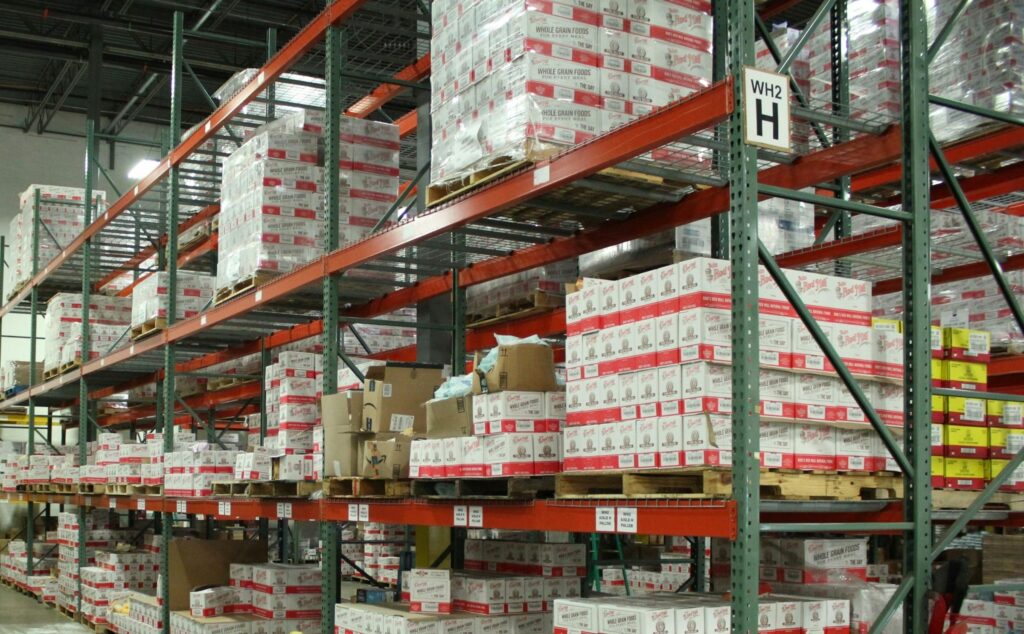
When it comes to warehouse safety, designing pallet racks for the applicable seismic requirements is essential.
No AHJ will grant permits for racks that aren’t designed for seismic, and no rack is safe without considering seismic requirements either.
In this guide, we’ll walk through the why, what, and how of seismic rack design, including pallet rack seismic compliance standards and critical pallet racking installation considerations, and show you how OneRack simplifies this complex process.
Why Seismic Design Matters for Pallet Racking
Seismic events are unpredictable—but their impact on a poorly designed rack system is entirely predictable. The U.S. Geological Survey reports that approximately 55 earthquakes occur globally each day, with roughly 16 per year classified as major events capable of causing significant structural damage. Here’s why proper seismic design and seismic compliance are critical:
Worker Safety: Rack failures can result in severe injuries or fatalities during a seismic event.
Inventory Protection: A collapsing rack system can destroy thousands—or millions—of dollars in inventory.
Regulatory Compliance: Building departments in seismic zones require racks to be designed according to IBC and ASCE 7 standards. Meeting pallet rack seismic compliance requirements ensures your system passes inspection and maintains proper permitting. Non-compliance can lead to fines, delays, or rejected permits.
Insurance Coverage: Some policies may not cover earthquake damage if the racking system wasn’t designed to meet seismic requirements.
Even if you’ve never felt a tremor, seismic design may still apply. Many jurisdictions are tightening their enforcement of seismic codes—even in moderate zones—based on updated USGS hazard maps.
Key Components of Seismic Rack Design
Effective seismic rack design combines engineering judgment with strict code adherence. Below are the major components that must be considered for both design and warehouse racking installation:
1. Determine Seismic Load Parameters
Start with your project’s seismic design values: Ss (short-period spectral acceleration) and S1 (1-second spectral acceleration). These are location-specific and can be obtained from the USGS Seismic Design Map.
Combine those with:
- Site Class (soil conditions)
- Risk Category (importance of occupancy)
- Building height and system flexibility
These inputs feed into ASCE 7’s equations for calculating seismic base shear, drift limits, and more. Accurate seismic load calculations are essential for both pallet rack seismic compliance and structural integrity.
2. Select the Right Rack Configuration
Certain configurations are better suited for seismic resistance:
- Back-to-back systems offer more lateral stability than single rows
- Shorter rack heights reduce sway and overturning
- Tighter beam spacing can limit deflection under combined vertical and lateral loads
Design decisions made in the planning stage affect not just compliance but long-term safety. These configuration choices also impact your pallet rack installation approach and seismic bracing requirements.
3. Anchor Racks Appropriately
Anchorage is a critical failure point during any seismic event. Seismic codes require:
- Anchors to resist both shear and uplift
- Minimum embedment depth into the slab (often 3–4 inches)
- Strong base plates with sufficient thickness and bearing area—typically 5″ × 5″ minimum in seismic zones, up to 6″ × 8″ in high-risk areas
Each anchor must be sized according to seismic demand. Poorly anchored racks are one of the most common reasons for seismic failure, making proper anchor specification critical during warehouse rack installation. Anchor pull-out or concrete failure around anchor points can trigger catastrophic cascade failures affecting multiple rack rows.
4. Account for Load Distribution
Seismic forces impact racks differently than static loads. Uneven pallet loads, overhanging products, and unbraced tops can create eccentric forces that worsen seismic performance.
A proper seismic design evaluates the center of mass, torsional effects, and rack stiffness to avoid amplifying dynamic behavior.
5. Ensure Connection Strength
Beam-to-upright connections are another common weak point. Seismic codes require:
- Beam connectors to resist combined gravity and lateral loads
- Locking mechanisms that remain engaged during vibration
- Evaluation of connector deformation under cyclic loading
6. Implement Appropriate Seismic Bracing
In high-seismic zones (SDC D, E, or F), standard rack frames may require supplemental seismic bracing to meet code requirements. This may include condensed bracing panels, braces larger in size and/or gauge, tube braces, or doubled braces. X or chevron braces are unique where they don’t take compression, allowing the braces to be smaller, but there are two diagonals in every panel.
The need for specialized seismic bracing depends on your Seismic Design Category, rack height, loading, and rack geometry. OneRack’s design engine automatically determines when supplemental bracing is required and specifies the appropriate system for your application.
Understanding Seismic Risk Assessment
Designing for earthquakes starts with assessing risk. But how do you know if your facility requires seismic design or what level of seismic compliance is mandatory?
Modern Seismic Design Categories Explained
ASCE 7 classifies structures into Seismic Design Categories (A–F) based on:
- Seismicity of the location (SS, S1)
- Site class (soil profile)
- Risk category of the building
Categories D, E, and F are the most extreme seismic requirements, often requiring specialized seismic bracing systems, while A–C are not as severe. All locations require seismic considerations, regardless of the seismic design category. Your SDC classification directly affects pallet rack installation specifications, including anchor sizing, baseplate dimensions, and bracing requirements.
How to Determine Your Facility’s Risk Level
Use the USGS Seismic Design Tool to find:
- Spectral accelerations (SS, S1)
- Site coefficients
- Seismic Design Category (SDC)
Also consult with your local building department—they may enforce seismic provisions more stringently than national code minimums. Understanding your SDC classification determines your pallet racking installation requirements and whether advanced seismic bracing is necessary.
Common Misconceptions About “Low-Risk” Areas
Some warehouse managers assume seismic design is only for California. Not true. Many areas east of the Rockies—including parts of Missouri, South Carolina, Utah, and even New York—have seismic design requirements.
Earthquake risk isn’t just about how often they occur—it’s also about how much damage they could cause if they do. Even moderate seismic zones require proper pallet rack seismic compliance to ensure permit approval and insurance coverage.
Why Every Warehouse Should Consider Seismic Design
Even in zones with modest seismicity, designing your racking system to withstand lateral forces:
- Increases overall structural integrity
- Reduces damage from forklift impacts
- Helps with future code updates or resale of the property
In short, seismic design is just good design. Facilities designed to seismic standards consistently outperform non-compliant systems—even during non-seismic events like severe weather or operational impacts.
Seismic Compliance and Industry Standards
Your pallet rack seismic compliance requirements go beyond basic building codes. Since 2005, FEMA and the Rack Manufacturers Institute (RMI) have enforced strict standards. Systems must meet ANSI MH16.1 specifications and demonstrate ASCE 7 compliance.
RMI establishes three core requirements:
- No-collapse: Structures remain intact during design-level earthquakes
- Load security: Prevent sliding or falling during ground motion
- Damage assessment: Mandatory post-event inspection protocols
Non-compliance risks permit rejection and voided insurance. OneRack automatically builds seismic compliance into every design, ensuring first-try approval.
After the Earthquake: Inspection and Recovery
Post-earthquake inspection is mandatory. Assess:
- Beam-to-upright connections for deformation
- Base anchors for pull-out or cracking
- Upright columns for bending
- Shifted loads and beam deflection
Document findings with photos for insurance claims. RMI requires a structural assessment before resuming operations.
Annual rack inspections verify anchor torque, check for cracks, and confirm load placard accuracy. Records demonstrate pallet rack seismic compliance during audits.
Conclusion
Seismic design for pallet racks is a high-stakes responsibility. Whether you’re in Los Angeles, Salt Lake City, or Nashville, it’s critical to assess your facility’s seismic risk, follow applicable design standards, and implement systems that are both code-compliant and practically safe.
With OneRack, seismic design and pallet rack seismic compliance become straightforward. You can input your project’s location, soil conditions, and load profiles—and get an engineered design that checks all the right boxes for both design and warehouse racking installation. No guesswork. No wasted time. Every design automatically meets FEMA, ASCE7, and ANSI MH16.1 requirements for your specific Seismic Design Category.
Need a seismic-ready design for your next warehouse project?
Register for a free trial of OneRack and start designing with confidence.
Try OneRack’s Pro Version, Completely Free
Get a 30-day free trial and start creating approved rack prelims within minutes.