
One wrong move can bring down your entire rack. Thousands in damages. Workers at risk. Operations halted.
You’re not the first warehouse manager to face this nightmare. A forklift driver shifts a beam. A supervisor decides to move a few pallets to fit more stock. Next thing you know, your racking system is unstable—or worse, collapsed. Why does this happen?
Because someone made a change without consulting the Pallet Rack LARC drawings.
LARC drawings—Load Application and Rack Configuration drawings—are not just documents. They are the blueprint for the safe, efficient, and compliant operation of your racking system. In this guide, you’ll learn why LARC drawings are critical, how to use them properly, how to interpret and update them, and what warehouse professionals need to know before making any changes.
Let’s make sure your racks don’t become the next headline.
Why Pallet Rack LARC Drawings Are Important
What Are LARC Drawings?
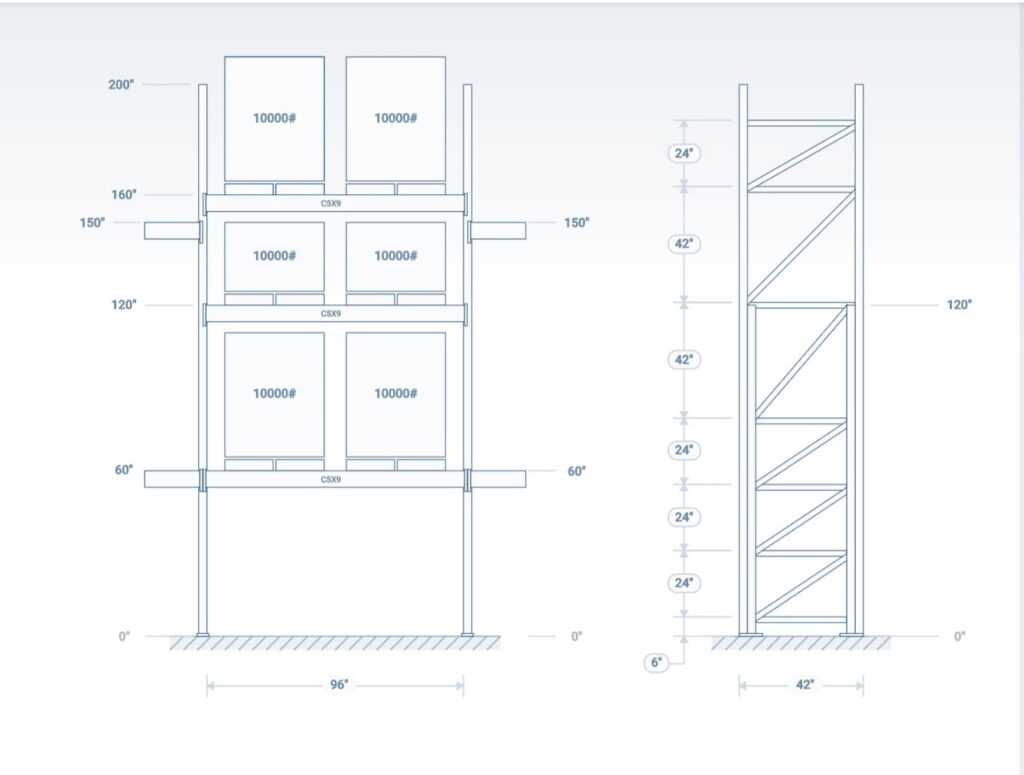
LARC stands for Load Application and Rack Configuration. These drawings are detailed technical documents that show the exact layout and load specifications of a racking system. Created during the design and permitting phase of a warehouse project, LARC drawings are essential for safe installation and operation.
Why They Matter
Too often, warehouse teams assume racking is modular and can be altered like LEGO bricks. The reality? Even a small change in beam elevation or pallet placement can compromise the entire structure.
LARC drawings prevent:
- Overloaded beams that bend or fail
- Mismatched uprights and connectors
- Reduced aisle clearance that risks forklift collisions
- Non-compliance with local or national building codes
Benefits of Using LARC Drawings
- Safety: Prevents catastrophic rack failures
- Efficiency: Ensures optimal space use and load handling
- Compliance: Required for permits and inspections by AHJs (Authorities Having Jurisdiction)
- Insurance: Often required for claim validation in the event of an incident
Key Information in LARC Drawings
- Maximum load per level
- Beam elevations and spacing
- Upright dimensions and material specs
- Anchor bolt locations and baseplate sizes
- Seismic and wind load ratings
- Permitting and code compliance information
Always consult the OEM or a qualified structural engineer before making any changes to your rack configuration.
How to Use and Update LARC Drawings Correctly
Here’s how your team should approach LARC drawings:
- Before Any Change: Pull the latest LARC drawing. Never assume the current layout matches what was originally installed.
- Verify Beam Elevations: Use a laser level or tape measure to ensure beam heights match the drawing.
- Check Load Capacity: Confirm whether the beam and upright specs support your current pallet loads.
- Submit Modifications for Review: If adjustments are needed, contact your racking supplier or engineer to create a revised LARC drawing.
- Label Updated Drawings: Keep digital and physical copies marked with revision dates in an accessible location.
- Train Your Team: Ensure supervisors and forklift operators understand where drawings are stored and what the limits are.
Bonus: Ask your engineering partner for a color-coded version of your LARC drawing. Red for critical load paths. Green for compliant bays. Orange for areas that need review.
How to Choose the Right Size Drawings for Your Warehouse
Choosing the right racking layout starts with the right inputs. Your LARC drawings must reflect real-world needs, not just a generic layout.
Most LARC drawings reference common rack sizes like:
- 96” beams
- 42” or 48” deep frames
- 12’ to 24’ tall uprights
But these aren’t universal. You must tailor your setup based on:
Pallet Size
Standard GMA pallets are 40″ x 48″, but not all inventory fits this mold. Oversized pallets need wider bays. Small cartons may allow for denser configurations. Your LARC drawing must reflect the real size of your inventory footprint.
Pallet Weight
Whether you’re storing paper towels or concrete forms, pallet weight dictates beam size and spacing. Most beams can support 2,500 lbs per level—but going over that without redesign can result in catastrophic failure.
Number of Pallets
How many SKUs you store, and how often you access them, influences whether you need single-deep, double-deep, drive-in, or pushback racking. LARC drawings help you balance density with accessibility.
The Industry Standard Rules You Must Follow
Compliance is not optional. Local building departments and OSHA both require documentation of rack systems, especially when:
- Rack height exceeds 8 ft
- The system is anchored to the floor
- The rack supports product above personnel or equipment
Here are common rules you must follow:
- RMI/ANSI MH16.1: The U.S. national standard for pallet rack design.
- IBC Seismic Requirements: Racking in seismic zones must include additional bracing, anchors, and calculations.
- Permit Drawings: Many cities require sealed LARC drawings as part of a building permit.
- Load Signage: RMI mandates that rack systems display clear signage indicating maximum load per level.
Neglecting these standards puts your warehouse at risk of fines, shutdowns, or worse—injuries.
Why Repairs Require Updated LARC Drawings
If you repair or replace damaged rack components without updating your LARC drawings, you’re flying blind.
Why You Must Update
- Material Substitution: Using different gauge steel or an off-brand upright alters load capacity.
- Load Redistribution: Shifting inventory or adding new product types impacts load paths.
- Insurance Validity: Updated LARC drawings protect you during liability claims.
Routine Inspections
It’s best practice to schedule a LARC drawing review:
- Annually
- After any incident (forklift collision, beam damage, etc.)
- Before installing new rack systems or mezzanines
Conclusion
LARC drawings are the heartbeat of a safe and efficient pallet rack system. From beam placement to load ratings, they provide the clarity your team needs to operate confidently and compliantly.
Modifying racks without consulting these drawings is like cutting wires in a control panel without a schematic. Don’t risk it.
Always consult the OEM or a qualified engineer before making any changes.
Looking for a smarter, faster way to manage your rack configurations?
Our OneRack software verifies loads and ensures you’re always operating within code. Save time, reduce risk, and keep your warehouse safe.
Try OneRack’s Pro Version, Completely Free
Get a 30-day free trial and start creating approved rack prelims within minutes.